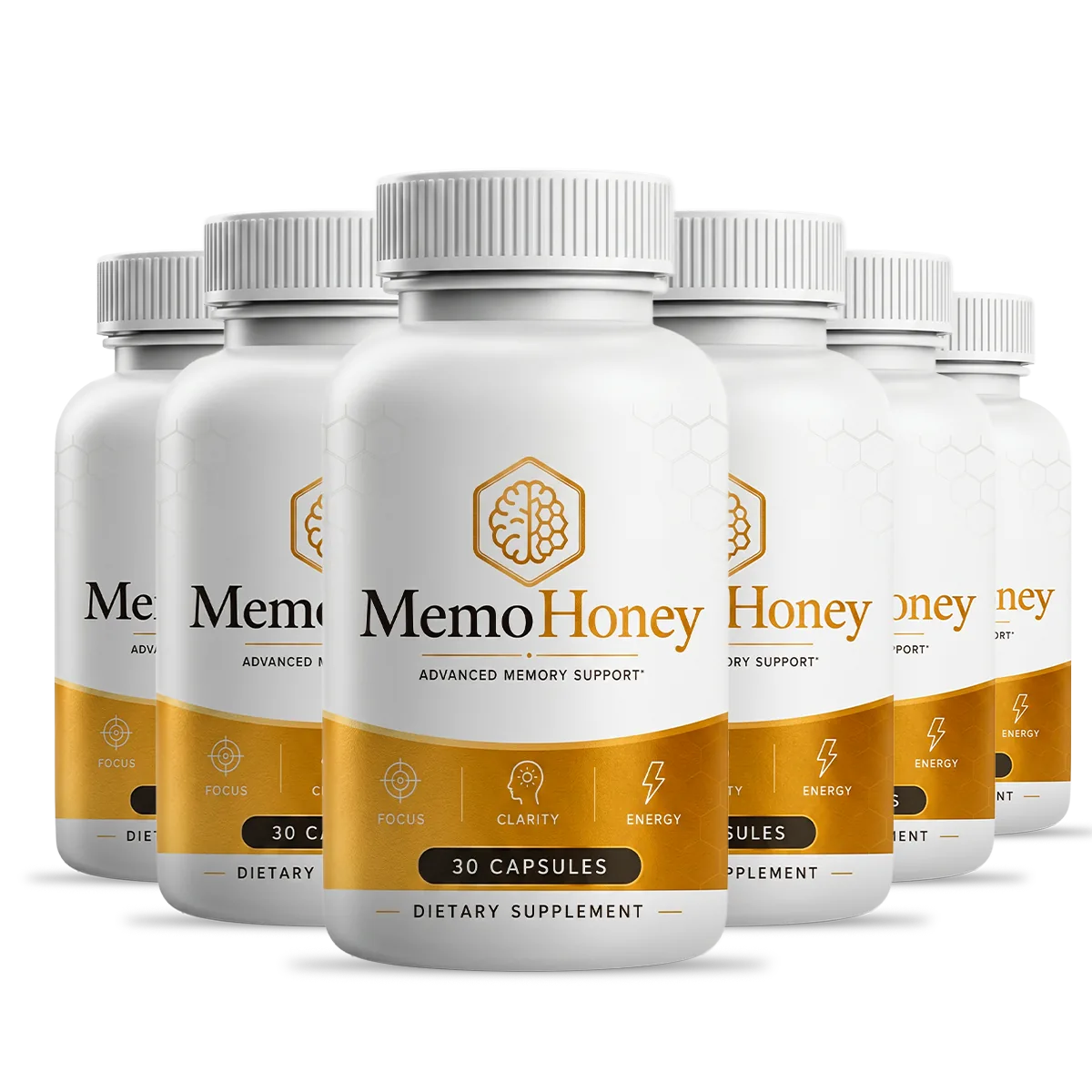
The Single Idea Behind the MemoHoney Formula
Most cognitive supplements are herbal. They reach for ginkgo, bacopa, lion's mane or
ginseng — plants with long traditional histories and research bases ranging from
substantial to almost nothing. MemoHoney takes an entirely different route.
Its organising idea is vascular. Nitric oxide signals the smooth muscle in blood vessel
walls to relax, widening the vessel so more blood passes through. The body makes it from
arginine. Four of the six ingredients feed that pathway from different directions:
arginine supplied directly, an alpha-ketoglutarate-bound form, and two citrulline
compounds the kidneys convert back into arginine — often more efficiently than
arginine taken alone.
Niacin reinforces the same objective through its own well-documented vasodilating
effect, and Beta-Alanine adds endurance support. Two of the compounds carry a second
component — alpha-ketoglutarate and malate — that participates in cellular
energy metabolism, which is the formula's secondary front.
What the MemoHoney Label Does Not Tell You
This is the most important paragraph on the page, so it goes near the top rather than
buried at the bottom.
Per-ingredient amounts are not published. You can see what is in the bottle but not how
much of anything, which means nobody outside the company can compare the formula against
published research or against a standalone product.
That matters here more than it might elsewhere, because these particular compounds have
well-characterised effective ranges. Research on citrulline typically uses several grams
per serving. Beta-alanine studies commonly run to multiple grams daily over several
weeks. Whether one capsule containing six ingredients delivers anything approaching
those figures cannot be determined from the outside.
The practice is legal and extremely common. It remains a genuine limitation, and any
site describing a formula as clinically dosed without publishing the numbers is asking
you to take that entirely on trust.
How to Read the MemoHoney Ingredient Pages
We have tried to keep three things apart that supplement marketing usually blends.
Established biochemistry means a mechanism is textbook — niacin's
role in NAD+ production, for instance. Research in another context
means good evidence exists but for a different application, which describes much of the
arginine and beta-alanine literature. Demonstrated cognitive benefit
means human trials show an effect on memory or focus, and it applies to less of this
formula than any seller would like.